
Yamaha motorcycling enthusiasts in India are eagerly counting down to August 27, 2026, when the long-rumored Yamaha YZF-R2 is expected to make its official debut. Positioned strategically above the immensely popular R15 series, the R2 aims to fill a substantial void in Yamaha’s Indian lineup. For years, riders seeking a logical performance upgrade from their 155cc supersports were forced to look at rival brands or consider much more expensive 300cc to 400cc machines.
Pre-bookings for the upcoming sportbike have officially commenced at select dealerships across the country for a fully refundable token amount of ₹10,000, with refund processing scheduled to begin after September 5. Manufactured locally in Chennai, the R2 is not just designed for Indian roads but is also slated for export to various international markets, highlighting Yamaha’s faith in the new platform.
Understanding the Market Positioning
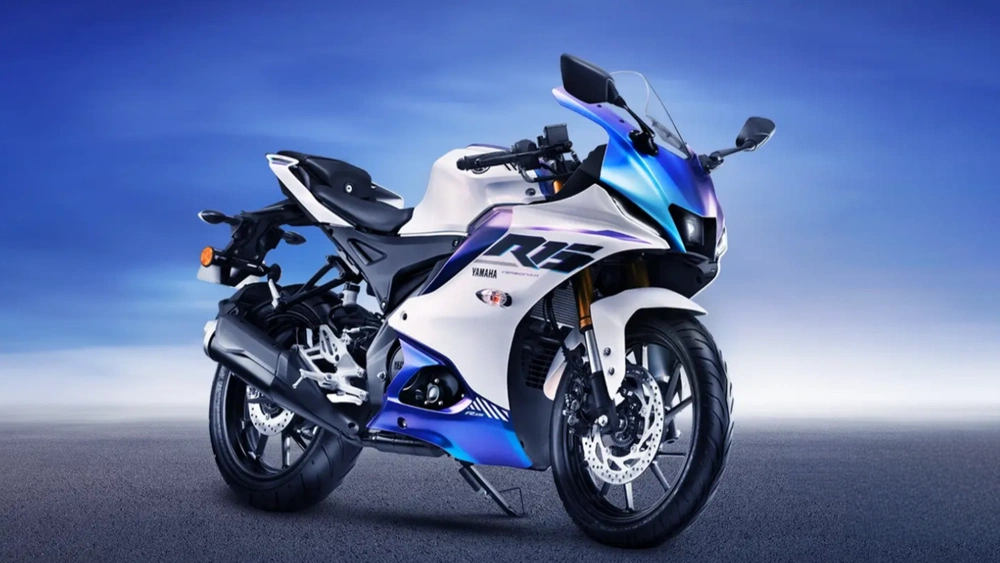
For a long time, Yamaha’s Indian catalog listed models like the R15 V4, R15M, and R15S, but lacked a mid-tier offering to connect the entry-level track bikes with larger international offerings like the R3. The R2 is not meant to replace the trusty R15; instead, it offers a permanent step up in power and capability.
To create distinct pricing separation, Yamaha is expected to streamline its existing 155cc range. Higher-tier variants like the R15M or older revisions like the R15S may be phase-discontinued to make room for the new flagship single-cylinder sportbike. Meanwhile, street-oriented offerings such as the MT-15 and XSR 155 will continue alongside the R2. Much like how Yamaha built an entire family around its 155cc engine, the R2 platform will eventually spawn other body styles, including potential naked or retro-styled derivatives.
Engine Performance and Power Delivery
The heart of the new Yamaha R2 will be a larger, newly developed liquid-cooled single-cylinder engine expected to displace between 200cc and 220cc. While official specifications remain under wraps until the launch event, industry expectations lean toward an output around 25 horsepower and roughly 20 Nm of peak torque.
- Engine Setup: Liquid-cooled, single-cylinder engine with expected Variable Valve Actuation (VVA).
- Target Output: Approximately 25 bhp and ~20 Nm torque.
- Core Advantage: Power-to-weight ratio rather than purely high power figures.
- Daily Usability: Tuned to deliver flexible low-to-mid range torque for traffic commuting while maintaining a high-revving top end for track days.
While competitors like the KTM RC 200 and Hero Karizma XMR produce similar power numbers, Yamaha’s key edge will likely come from weight management. The R15 V4 weighs an exceptionally light 141 kg, whereas rivals like the RC 200 (160 kg) and Karizma XMR (163.5 kg) carry significantly more bulk. If Yamaha keeps the R2’s curb weight low, its real-world acceleration and flickability could easily lead the class.
Advanced Electronics and Features
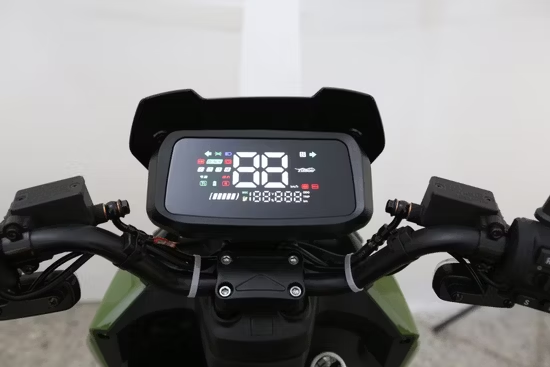
The R15 series set high expectations by offering electronic rider aids rarely seen in small-capacity motorcycles, including traction control, quickshifter options, and TFT instrumentation. The R2 is set to take these electronic features a step further.
| Feature Area | Yamaha R15 V4 | Expected Yamaha R2 |
| Throttle System | Standard Mechanical Cable | Electronic Ride-by-Wire |
| Quickshifter | Upshift-only | Bi-directional (Up and Down) |
| Riding Modes | Basic Track/Street settings | Multiple Engine Power Modes |
| Braking Safety | Dual-channel ABS | Dual-channel ABS with Switchable Modes |
| Instrumentation | Digital TFT with Bluetooth | Advanced TFT with Turn-by-Turn Navigation |
Revised Chassis, Suspension, and Handling
Yamaha’s Deltabox frame is renowned for giving light motorcycles razor-sharp handling characteristics. However, fitting a larger engine with higher torque outputs requires key structural enhancements to preserve that signature agility.
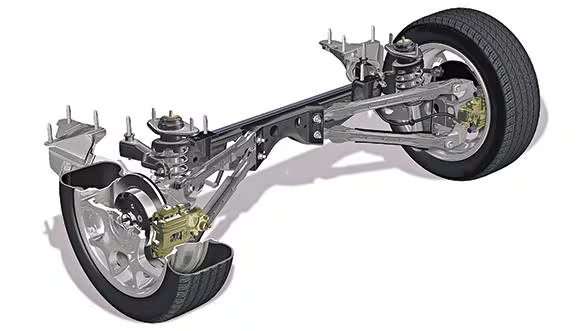
- Frame Enhancements: Re-engineered Deltabox layout with reinforced engine mount points and adjusted rigidity to handle extra speed and stress.
- Suspension Tuning: Gold-finished upside-down (USD) front forks paired with a linked Monocross rear suspension, recalibrated for high-speed stability and aggressive cornering.
- Upgraded Braking: Larger front disc brake assembly (likely 300mm to 320mm) paired with dual-channel ABS to match the increased power output.
- Tire Setup: Broader contact patch to improve grip during hard acceleration and heavy leaning, expected to step up to a 110-section front and a 150-section rear radial tire.
Design and Styling Heritage
Visually, the R2 will carry the brand’s unmistakable R-series DNA while establishing its own identity so it doesn’t look like a simple R15 facelift. The R15 V4 pulled heavy design cues from the M1 MotoGP bike and the YZF-R1, featuring a central air intake with a hidden LED headlight and slim position lamps.
The R2 will expand on this design philosophy with a wider fairing structure, a more muscular fuel tank providing better rider knee grips during aggressive riding, and a sharper rear seat tail cowl. The goal is to give the motorcycle an authentic big-bike feel that justifies its higher positioning on showroom floors.
Expected Price and Key Competitors

The Yamaha R2 is expected to carry an estimated ex-showroom price tag between ₹2.00 lakh and ₹2.30 lakh. This pricing bracket puts it squarely against established sub-250cc sportbikes in the Indian market.
Primary Rivals Breakdown:
- KTM RC 200 (₹2.15 lakh – ₹2.24 lakh): Features a 199.5cc liquid-cooled engine putting out 25 hp and 19.2 Nm. Comes equipped with 43mm WP Apex USD forks and a 320mm front disc, but weighs 160 kg.
- Hero Karizma XMR (₹1.76 lakh – ₹1.86 lakh): Powered by a 210cc engine making 25.1 hp and 20.4 Nm. Offers strong value with a slipper clutch, TFT screen, and aggressive fairing design at a lower entry price.
- Suzuki Gixxer SF 250 (₹1.92 lakh – ₹1.98 lakh): Uses a 249cc oil-cooled engine making 26.5 hp and 22.2 Nm. Focuses on effortless highway cruising and long-distance reliability with a 161 kg curb weight.
At around ₹2.00 lakh, the R2 will present a compelling mix of dynamic handling, light weight, and advanced tech. If priced closer to ₹2.30 lakh, it will lean heavily on its premium chassis tuning, electronic aids, and iconic badge appeal to win over riders.
Frequently Asked Questions
1. When will the Yamaha R2 launch in India?
The Yamaha R2 is scheduled for its official launch on August 27, 2026, with pre-bookings already open at select dealerships for ₹10,000.
2. Will the Yamaha R2 replace the existing R15?
No, the R2 will sit above the R15 as a performance step-up. However, Yamaha may trim specific R15 variants like the R15M or R15S to keep the pricing structure clean.
3. What is the expected price range for the R2?
The motorcycle is expected to be priced between ₹2.00 lakh and ₹2.30 lakh (ex-showroom), positioning it directly against the KTM RC 200 and Hero Karizma XMR.
4. How much power will the new engine produce?
The new liquid-cooled single-cylinder engine (around 200cc–220cc) is expected to produce roughly 25 bhp and nearly 20 Nm of torque.
5. What new features will the R2 offer compared to the R15?
The R2 is expected to introduce a ride-by-wire throttle, multiple riding modes, a bi-directional quickshifter, wider radial tires, and an upgraded braking system.