
If you have ever visited the quiet hills of Kainchi Dham in Uttarakhand or seen pictures of a smiling saint wrapped in a simple plaid blanket, you already know the profound presence of Neem Karoli Baba. Known affectionately as “Maharaj-ji” to millions across the globe—from everyday villagers in North India to tech icons like Steve Jobs and Mark Zuckerberg—his life message was remarkably simple: “Love all, serve all, feed all, and remember Ram.”
In August 2026, his incredible journey made its way to the silver screen with the release of Hanuman Ansh, a Hindi-language devotional biographical drama directed by physician-turned-filmmaker Vishal Chaturvedi. Based on Chaturvedi’s book Divine Detour, this film marks the first chapter of an ambitious spiritual trilogy.
Whether you are a lifelong follower of Maharaj-ji, an admirer of Indian philosophy, or simply curious about the movie, here is a complete, humanized breakdown of the film’s story, cast, music, and cultural importance.
Key Information at a Glance
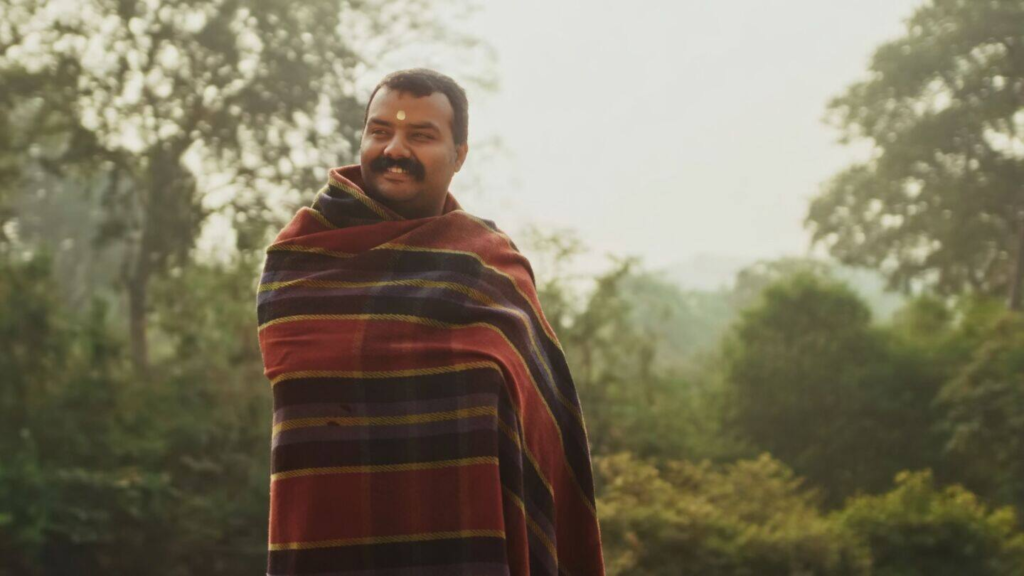
- Movie Title: Hanuman Ansh (Part 1 of the Spiritual Trilogy)
- Release Date: August 7, 2026 (Shifted from its initial July 31 date)
- Director & Writer: Dr. Vishal Chaturvedi
- Lead Actor: Shobhinaw Satyaa (as Neem Karoli Baba)
- Production House: Swambhu Media Network
- Distributor: Cinépolis India
- Certification & Length: Rated ‘U’ | 2 Hours 30 Minutes
- Music Release: Times Music & Junglee Music
What is the Story of Hanuman Ansh About?
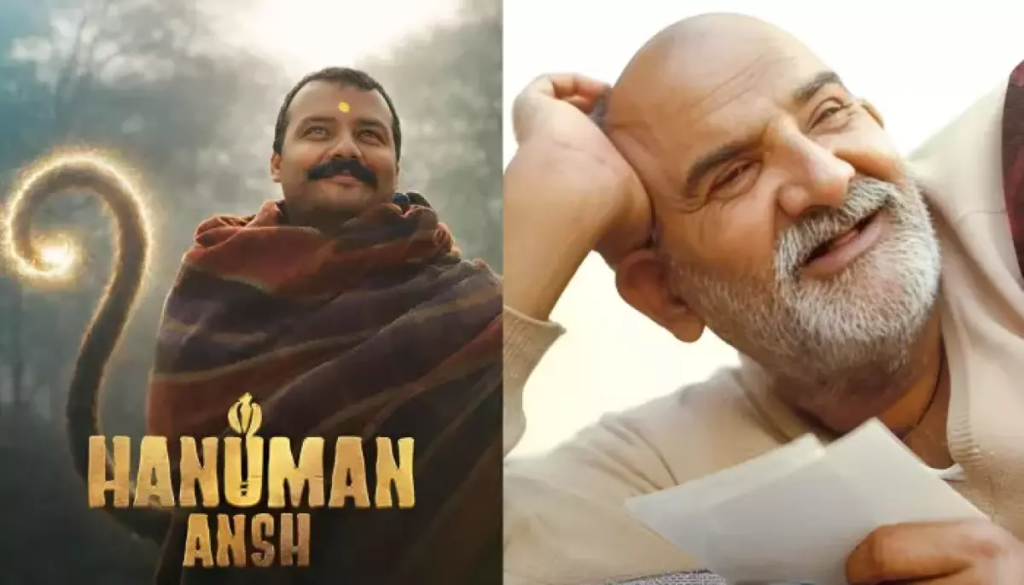
At its core, Hanuman Ansh is not just a standard movie biopic; it is an emotional, quiet exploration of selfless love and divine surrender. The title translates to “An Essence of Lord Hanuman,” reflecting the belief held by millions that Maharaj-ji was an incarnation or direct vessel of Hanuman’s devotion.
The narrative spans several decades, tracking his transformation from a young, grieving boy into a revered saint.
1. The Grief of Young Lakshman
The story opens in the early 20th century in the region of Braj. A 13-year-old boy named Lakshman Das (played by Vihaan Shedge) loses his mother—the central anchor of his life. Heartbroken and searching for answers, Lakshman leaves his home. Unlike traditional ascetics who head to the Himalayas purely for personal enlightenment, Lakshman’s journey is driven by a deep longing to connect with the divine through Lord Rama and Hanuman.
2. Breaking Free from Institutional Religion
As he travels, Lakshman arrives at a major Vaishnavite temple in Rajkot. The head priest (Anil Rastogi) notices the boy’s rare spiritual radiance and attempts to guide and evaluate him. However, young Lakshman remains completely humble, indifferent to praise, and uninterested in temple politics or organized hierarchies. He quietly slips away, demonstrating a core theme of the film: formal religious institutions can sometimes become a form of bondage, whereas true faith is lived inwardly.
3. Years of Silent Wandering
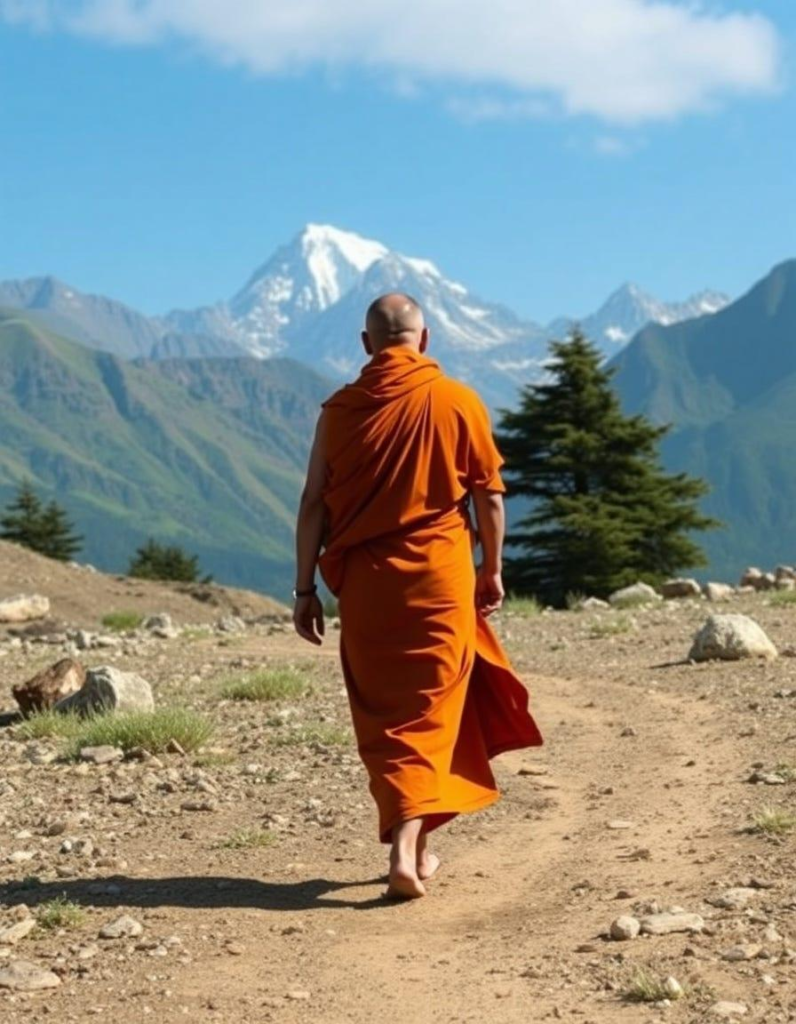
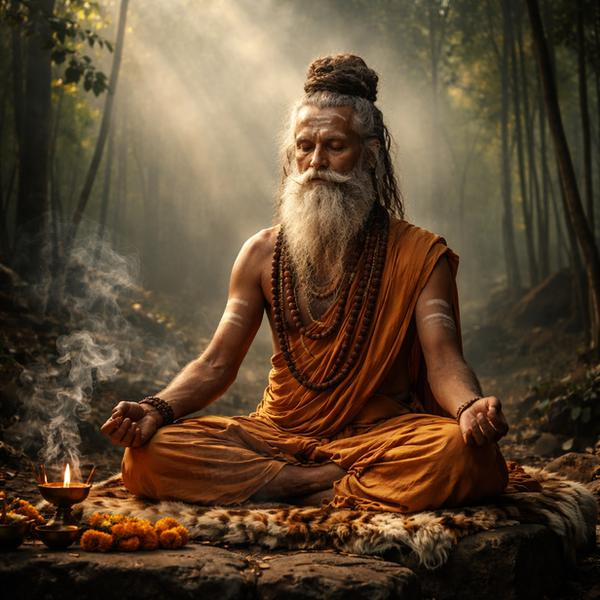
For over a decade, Lakshman lives as a wandering sadhu. He sleeps along riverbanks, meditates beneath ancient trees, and accepts basic food offerings. He learns spiritual lessons directly from nature—the calls of wild birds, the flowing river, and months of solitary discipline. In one famous scene, local villagers assume he has drowned after staying submerged in water for hours, only to watch him emerge completely unharmed and serene.
4. The Famous Train Miracle at Neeb Karori
By age twenty-five, wearing only a simple loincloth, Lakshman boards a first-class compartment of a British passenger train without a ticket. A colonial railway officer orders him to get off at a tiny, obscure stop in Uttar Pradesh.
Lakshman calmly steps down and sits quietly beneath a nearby tree. But when the conductor signals to depart, the train will not move. Engineers inspect the engine, check the steam pressures, and release the emergency brakes—nothing works. Realizing something supernatural is happening, the railway officials ask Lakshman for his forgiveness. He smiles, steps back onto the train, and instantly, the engine roars back to life.
Before leaving, he makes two predictions:
- First, that no saint or sadhu in India should ever be mistreated or thrown off a train for lacking money.
- Second, that a proper railway station would one day be built on that exact spot.
That village was Neeb Karori (later spelled Neem Karoli), and from that day onward, the young saint became known to the world as Neem Karoli Baba.
Detailed Cast & Characters
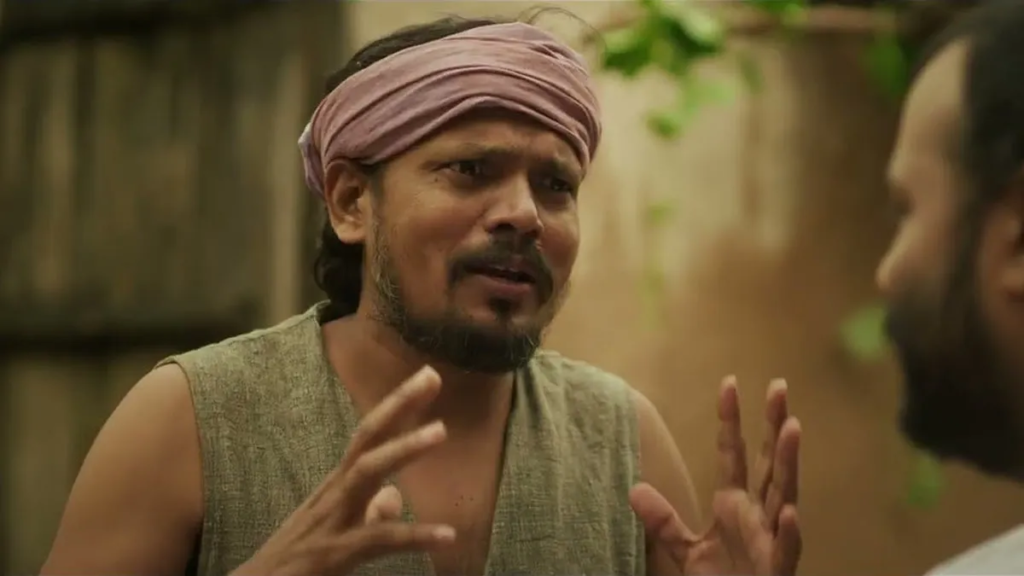
The director chose to avoid overly commercialized casting, opting instead for actors who could bring genuine raw emotion and simplicity to their roles.
| Actor | Role / Character |
| Shobhinaw Satyaa | Neem Karoli Baba (Adult Lakshman Das) |
| Vihaan Shedge | Young Lakshman Das (Teenage Maharaj-ji) |
| Chandan K. Anand | Dr. Ram Nandan Bhosle |
| Anil Rastogi | Mahant Ji (Rajkot Priest) |
| Purnima Tiwari | Rambeti |
| Nikhil Dubey | Sudhir |
| Udaysinh Rajput | Banshidhar |
| Rajiv Mishra | Inspector Nasir Khan |
| Aleksei Danilov | Mr. Francis (Colonial Railway Official) |
Behind the Scenes: Production & Intent
The story of how Hanuman Ansh was made is almost as unique as the movie itself.
- The Doctor-Turned-Director: Vishal Chaturvedi, who spent years practicing medicine before transitioning to filmmaking, spent over a decade researching the life of Neem Karoli Baba. He adapted the script directly from his book Divine Detour. In interviews, Chaturvedi emphasized that the movie was never intended to be a big-budget blockbuster, but rather a devotional offering (seva).
- Authentic Locations: To capture the genuine atmosphere of early 1900s India, filming took place across real historical locations in Uttar Pradesh (including Chitrakoot and Vrindavan) alongside studio setups in Mumbai.
- The Kainchi Dham Launch: The movie’s official production began with a traditional poster launch at Kainchi Dham Ashram in early 2026, seeking blessings from the community of devotees before shooting wrapped up.
The Music and Devotional Soundtrack

In a devotional film, music carries half the emotional weight. The soundtrack of Hanuman Ansh combines traditional Indian instruments, ancient chants, and original compositions.
Released under Junglee Music and Times Music, the album features key tracks by renowned spiritual artists:
- “Aavagaman” – Performed and composed by Sadhu S. Tiwari, this track focuses on the endless cycle of birth and spiritual awakening.
- “Om Namah Shivaya” & “Shri Ram Jai Ram” – Contributed by legendary American Kirtan singer Krishna Das (Jeff Kagel), a direct disciple of Neem Karoli Baba who brought Maharaj-ji’s chants to the Western world.
- “Jai Hanuman” – Sung by Shreyas Dharmadhikari and Rishi Pathak, an energetic hymn dedicated to the strength and humbleness of Hanuman.
- “Ram Bhajan Ki Or” – A soft, acoustic melody sung by Nivedita Padmanabhan about walking away from worldly distractions toward peace.
- “Hriday Mein Jinke SitaRam” – Composed by Dhirendra Mulkalwar with lyrics by director Vishal Chaturvedi, capturing the quiet inner devotion of Maharaj-ji.
What Makes Hanuman Ansh Worth Watching?
If you are deciding whether to stream or watch this movie, here are three main reasons why it stands out from typical religious cinema:
- Focus on Humanity over Drama: Unlike many mythological films that rely heavily on loud special effects, Hanuman Ansh treats miracles as natural extensions of deep love. The focus remains on how Maharaj-ji treated the poor, fed the hungry, and comforted the brokenhearted.
- Accessibility: While filmed primarily in Hindi, the distribution included subtle regional subtitling in Braj and Bundeli, preserving the local linguistic flavor of the regions where Neem Karoli Baba actually walked.
- Universal Themes: You don’t need to be deeply religious to connect with the film. Its messages—letting go of ego, respecting nature, helping strangers without expecting praise, and seeking inner peace—are universal.
What’s Next? The Spiritual Trilogy
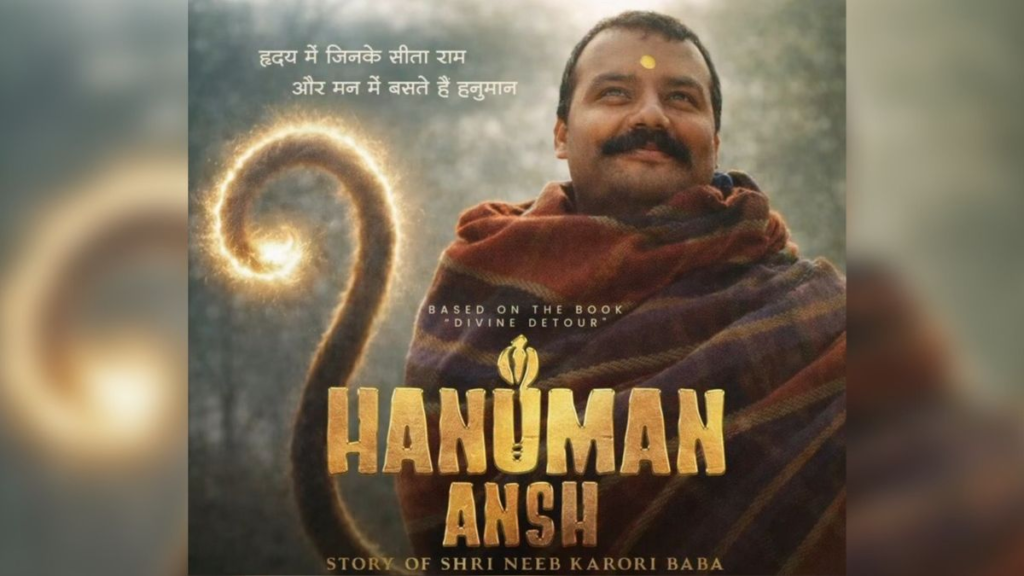
Hanuman Ansh is explicitly labeled as Part 1. Director Vishal Chaturvedi has confirmed that two subsequent films are planned to complete the trilogy:
- Part 1 (Current): Focuses on the early life, spiritual trials, wandering years, and the miracle of Neeb Karori station.
- Part 2 (Upcoming): Expected to explore the establishment of major ashrams in Vrindavan and Kainchi Dham during the mid-20th century.
- Part 3 (Upcoming): Anticipated to cover his interaction with Western seekers in the late 1960s and 1970s (such as Ram Dass, Bhagavan Das, and Krishna Das) and his lasting global legacy.
FAQs
1. What is the movie Hanuman Ansh about?
It’s a devotional drama based on the real life of spiritual saint Neem Karoli Baba (Maharaj-ji). The movie follows his transformation from a young boy grieving his mother to a revered saint known for his simple message of love, service, and faith.
2. Who plays the lead role of Neem Karoli Baba?
Actor Shobhinaw Satyaa plays the adult Neem Karoli Baba, while young actor Vihaan Shedge portrays him during his teenage years as Lakshman Das.
3. Is Hanuman Ansh based on a book?
Yes! The screenplay is written and directed by Dr. Vishal Chaturvedi, who adapted the movie directly from his own book, Divine Detour.
4. What is the significance of the train scene in the movie?
It recreates the famous real-life miracle where a young Maharaj-ji was asked to step off a first-class train for lacking a ticket. When he stepped off, the train inexplicably stopped working until the officials asked for his forgiveness, leading to the creation of the Neeb Karori station.
5. Will there be a sequel to Hanuman Ansh?
Yes. Hanuman Ansh is the first chapter of a planned spiritual trilogy. Future installments will focus on the setup of his ashrams like Kainchi Dham and his influence on global followers.