
We’ve all been there: you have five minutes to kill while waiting for a meeting to start, your coffee to brew, or a slow file to download. You don’t have the time—or the mental energy—to launch a massive, narrative-heavy video game that requires a two-hour commitment. That’s where Best Timer Games 2026 come in. These quick and engaging games are perfect when you just want something fast, fun, and instantly entertaining without making a big time commitment.
Enter the world of online timer games.
Timer games pack quick bursts of entertainment into bite-sized sessions. Built around a simple premise—how fast can you react, think, click, or solve a puzzle before the clock hits zero?—these games have surged in popularity across web browsers and mobile devices.
Whether you’re looking to polish your everyday keyboard skills, sharpen your memory, or challenge your friends to beat your high score, this comprehensive guide explores everything you need to know about the best timer games online today.
What Exactly Are Online Timer Games?

At its core, a timer game is any digital game where time is the central mechanic driving the challenge. Instead of letting you ponder a move indefinitely, the game places you on an active countdown clock.
Depending on the game design, your goal usually falls into one of three categories:
- Beat the Clock: Complete a specific objective (like solving a cross-word or typing a paragraph) before time runs out.
- Score Attack: Achieve the highest possible score within a fixed time window (e.g., 30 or 60 seconds).
- Survival Mode: Stay alive or keep a streak going as the timer gradually speeds up with every level.
The charm of timer games lies in their accessibility. You don’t need a high-end gaming PC, an expensive console, or a 50-page rulebook. If you have a web browser on a smartphone, tablet, or laptop, you’re ready to play within seconds.
Why Are Timer Games So Addictive?
Why do simple countdown games capture our attention so effectively? It comes down to a few psychological and practical factors:
- Instant Dopamine Hits: Completing a 60-second game provides immediate feedback and satisfaction without any long commitment.
- Low Stakes, High Excitement: The ticking clock creates artificial pressure. Even an ridiculously simple task—like clicking on red circles—feels thrilling when you only have 3 seconds left on the clock.
- Built-in Self-Improvement: Timer games naturally generate clear, measurable scores. If you score 45 points today, your brain immediately wants to hit 50 tomorrow.
- Zero Barrier to Entry: Almost all popular timer games are free, browser-based, and load in a split second without requiring downloads or sign-ups.
The 6 Popular Types of Timer Games (And Which One You Should Play)
Not all timer games test the same skills. Depending on whether you want a physical fast-finger challenge or a cerebral mental workout, here are the main categories to explore:
1. Reaction Time Games
Reaction timer games are the purest test of your central nervous system. The premise is simple: watch the screen and react the microsecond a visual or audio cue changes (for instance, clicking as soon as a box turns from red to green).
- What they test: Visual processing speed and physical reflexes.
- Why they’re great: They take less than 10 seconds per round and offer a fascinating peek into your body’s raw reaction time (the average human reaction time is around 200–250 milliseconds!).
2. Typing Speed Challenges
Typing timer games give you a passage of text, single words, or random character strings to type out within 30, 60, or 120 seconds.
- What they test: Keyboard familiarity, hand-eye coordination, and speed-accuracy balance.
- Why they’re great: Unlike pure arcade games, typing challenges deliver a tangible real-world benefit. Practicing regularly can make you faster at drafting emails, writing essays, or coding.
3. Memory & Recall Timer Games

Memory games add an intellectual layer to the race against the clock. You might be shown a grid of cards for 3 seconds, flipped face down, and tasked with matching all pairs before the 30-second timer expires.
- What they test: Short-term memory capacity, spatial awareness, and calm decision-making under pressure.
- Why they’re great: They force you to process and retain information quickly, making them fantastic mental warm-ups before studying or working.
4. Speed Puzzle Games
From timed Sudoku and fast-paced word scrambles to block-matching games like Tetris or Bejeweled, timed puzzles demand both logic and time management.
- What they test: Pattern recognition, strategic planning, and problem-solving speed.
- Why they’re great: They prevent you from overthinking. When you don’t have 5 minutes to ponder a single move, you learn to trust your intuition.
5. Trivia & Quiz Countdowns
Trivia timer games test how quickly you can retrieve stored knowledge from your brain. You’re presented with multiple-choice questions on general knowledge, pop culture, history, or science, with only 5 to 10 seconds to lock in each answer.
- What they test: Rapid memory retrieval and general knowledge.
- Why they’re great: They are ideal for social play. Passing a phone around a table to see who can answer the most trivia questions before the buzzer goes off is a classic party activity.
6. CPS (Clicks Per Second) & Tapping Games
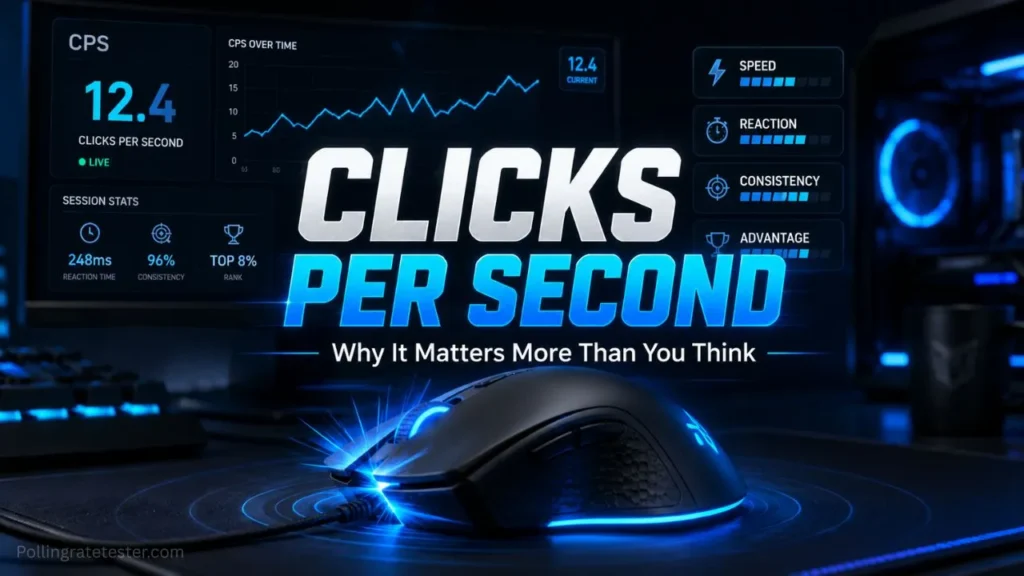
Click-speed games measure how many times you can physically tap a touchscreen or click a mouse button in 5, 10, or 100 seconds.
- What they test: Pure physical endurance and finger dexterity.
- Why they’re great: While clicking a mouse 80 times in 10 seconds won’t land you a job promotion, it’s a surprisingly competitive pastime among casual gamers trying to master techniques like “butterfly clicking” or “jitter clicking.”
Comparison: Which Timer Game Fits Your Mood?
| Game Category | Physical Effort | Mental Effort | Average Game Length | Best Used For |
| Reaction Timer | Low | Low | 5–10 Seconds | Quick reflex check |
| Typing Games | Medium | Medium | 60 Seconds | Developing work/study skills |
| Memory Games | Low | High | 30–90 Seconds | Brain warm-up |
| Puzzle Countdowns | Low | Very High | 2–5 Minutes | Logic practice under pressure |
| Trivia Countdowns | Low | Medium | 10 Seconds / question | Playing with friends & family |
| Click Speed (CPS) | Very High | Low | 5–10 Seconds | Quick finger endurance test |
Are Timer Games Actually Good for Brain Training?

A common question people ask is whether playing timer games will actually make them smarter.
The honest answer? They are great for mental stimulation, but they aren’t a magic cognitive cure.
While playing a high-speed memory game won’t automatically boost your general IQ, it does train specific skill sets:
- Focus & Sustained Attention: Because a single distraction causes an instant loss, timer games force 100% concentration for short bursts.
- Stress Tolerance: By placing you under mild, harmless time pressure, these games teach your brain to stay calm and execute tasks even when the clock is running out.
- Fine Motor Coordination: Tapping and typing challenges help maintain hand-eye coordination and spatial accuracy.
To get the most benefit out of timer games, treat them as a fun, stimulating break alongside other healthy habits like reading, physical exercise, and sleeping well.
Pro Tips: How to Crush High Scores in Timer Games
If you want to move up the leaderboards and beat your personal bests, keep these simple strategies in mind:
- Prioritize Accuracy Over Speed First: In almost every timer game (especially typing and puzzles), mistakes carry heavy penalties. Making two typos in a rush can cost you more time than typing 10% slower with zero errors.
- Find Your Ergonomic Setup: If you’re playing reaction or click-speed games on a desktop, make sure your wrist is supported and your mouse sensitivity isn’t set too high. On mobile, use your dominant thumb or index finger for maximum stability.
- Master the Art of Controlled Breathing: When the countdown hits 5 seconds, it’s natural to tense up and hold your breath. Panic leads to misclicks. Take a slow breath out to keep your hands steady.
- Learn Pattern Recognition: In puzzle and memory games, top players don’t look at every individual piece. They look for clusters and recurring patterns. The more you play, the more your brain automatically recognizes these arrangements.
Playing Safely: What to Watch Out For Online

Because timer games are simple to make, thousands of websites host them. While most are completely safe, keep these safety tips in mind when searching for new games online:
- No Downloads Required: 99% of legitimate timer games run directly inside your modern web browser (using HTML5/JavaScript). If a simple reaction game asks you to download an executable
.exefile or install a browser extension, close the tab immediately. - Avoid Suspicious Registrations: You shouldn’t need to enter your credit card, home address, or phone number just to play a free 30-second typing test.
- Mind Your Ergonomics: Repeatedly clicking a mouse at maximum speed (like in CPS games) can strain your tendons. If you feel any wrist discomfort or finger fatigue, take a break!
The Future of Timer Games
As mobile web performance improves, timer games are evolving rapidly. We are seeing a move toward real-time asynchronous multiplayer, where you can take a 30-second puzzle challenge and automatically compare your video replay against a friend who played their turn hours earlier.
Additionally, educational platforms are integrating timer mechanics into adaptive learning algorithms—adjusting the countdown speed dynamically based on a student’s confidence and progress. Regardless of how technology changes, the core appeal of the timer game remains timeless: a quick, fair, and exhilarating test of what you can achieve under pressure.
- Best Timer Games 2026: Ultimate Speed Challenges to Try
- Mario Kart World 2026: Everything You Need to Know About the New Racing Game
- iPhone 18 Pro 2026 Guide: New Features, Design, Camera & Performance

FAQs
Are most online timer games completely free to play?
Yes. The vast majority of timer games—including popular reaction tests, typing challenges, and click speed tests—are completely free to play directly in your web browser on mobile or desktop.
Can timer games help me type faster at work?
Absolutely! Regular practice with typing speed timer games builds muscle memory, increases words-per-minute (WPM), and helps you correct finger placement mistakes over time.
What is a good score on a 5-second click speed test?
The average click speed for most casual players is around 6 to 7 clicks per second (CPS). Advanced players using specialized techniques like jitter clicking can reach 10 to 14+ CPS!
Are timer games safe for kids?
Yes, timer games are generally great for kids, particularly educational variations focusing on fast math problems, spelling, or vocabulary recall. Just ensure they are playing on child-safe websites free of invasive pop-ups.
Do I need a gaming mouse or special hardware to play?
Not at all. Standard office mice, laptop trackpads, and mobile touchscreens work perfectly fine for almost every casual timer game available online today.